Showing posts with label Featured Journalism. Show all posts

Thursday, January 10, 2008

"Male"icure Trendspotting?


I go to ask my 45-year old male student's opinion on shopping in Tokyo's famous Ginza tonight when I look down and find myself instead saying, "Did you get a manicure??"

"Wow, you noticed. What do you think?"

"Hmmm...," I hesitate, "It's nice, but it kind of looks like girly, doesn't it?"

He laughs and says to the class, "I think I'm the first man to ever have this done."

"Well at least in Sasebo you are," I said.

Apparently, though, he is not the first in one of Tokyo's hippest trend-setting areas, "The Ginza," where all male nail salons are popping up among this Rodeo drive of upscale shopping. For $25 one can get his nails filed and finished. This is a new luxury for man kind.

Could this be the birth of trend spotting from my unfashionable elbow of a city where I reside in western Japan? Is it cuticle repair, male nail appointments and glossy finishes from here on out?

Toss out the aforementioned girly comment. You go boy! Guys deserve flawless cuticles too.

So all you chicks out there grab your man's hand and file, trim, paint and polish. And all you dudes, don't be shy, raid your sister's bottom bathroom drawer and dig out the clear. Just don't go color... we're not ready for that yet.

(holla back...aka comment... once you do the deed... let me know how it goes!!)

Monday, October 08, 2007

Green Houses


Now that's a tree house. Oops, I stand corrected. Make that "tea" house. He loves mud, gets giddy when dandelions poke through from the walls, relishes in crooked wood, and can literally put gazers in touch with nature.

He is 61-year-old Japanese architect Terunobu Fujimori and he is a rebel with a cause. Until his 40s he was a roadside detective, only noting what was being built, at the same time chronicling what was being lost. While his counterparts were establishing Japan's global fame of daggering angles and superman-proof steel and glass to withstand typhoons and earthquakes, Fujimori hunted the strange, garnering ideas for his own wall of the weird.

"I don't like steel or glass or concrete. I know they can't be helped. But they need critics. That's why I've been saying for 15 years that I want to build a high-rise tower of dandelions."

That has yet to come. Though he has built a high-rise teahouse, on which dandelions do peek out. Small rooms, low entrances and a fireplace to boil water are the only traditional characteristics redefined in this Japanese teahouse. It sits on cedar legs in Nagano, Japan, rising 20 ft in the air. Child onlookers would dream of commissioning Fujimori for their backyard forts.

Using only the minimum steel beams for stability and safety of a structure, Fujimori then covers them with natural materials. In addition to green roofs and teahouses, Fujimori has created houses shaped like oven mitts and teapots.
Who would have thought you'd have to mow your roof?


Tuesday, August 07, 2007

One Surivor's Account

(Photos courtesy of Reiko Hiramatsu)

Reiko, the year of the Nagasaki bombings:


Reiko as a young adult:


Three days ago silence fell upon Hiroshima City's Peace Memorial Park in remembrance of the world's first atomic bomb. Today, Nagasaki follows suit.

This morning thousands will gather and pray for the sufferers and bereaved families. Meanwhile, as the bell tolls at 11:02 a.m. in Nagasaki's Peace Park, one survivor will have her own private moment of reflection.

"To be alive now is a blessing," she said.

On the early morning of August 9, 1945, Reiko Moribayashi didn't flinch as sirens resounded through her hometown of Nagasaki city, signaling the threat of an air raid. Rather, she rejoiced. Two thoughts entered the 15-year old's head: 1. Here it goes again, and 2. This means I don't have to go to work after all.

At that moment, the fervor around the Matsuyama streetcar stop amplified as Reiko and her classmates talked about how they would spend their mornings, celebrating the fact that it would not be laboring on an assembly line. Their chatter continued as they were sheltered to a nearby dugout and shortly after were ordered to return to their homes.

"This was routine for us," Reiko said, "Just another day in wartime Japan."

She knew her lazy morning would soon come to an end at 8:30 a.m. when another round of sirens wailed, telling everyone that the threat was over and they were to resume their daily activities. This meant wartime work for Reiko.

She hustled down the steep slope that her house was on, meeting up with three classmates, heading towards the Shianbashi stop. The streetcar would take her three miles to a Mitsubishi factory where she spent her days -- for the time being -- with her friends working on an assembly line, instead of school.

But she never made it there. She fell short, literally. As she entered the front hall of another friend's house near the streetcar stop, a yellow light flashed before her eyes. A strong wind then overpowered her and knocked her on top of her friends. Glass shattered and windows broke. The house went dark. She got up, confused, and together with her three friends escaped to a nearby dugout close to Sofukuji Temple. Soon after, she found out she was three miles from the hypocenter of a nuclear bomb.

"I didn't hear any noise from the explosion," Reiko said, "but I do remember the roar of a plane just moments before I walked into the entrance way."

Her work place, one mile from the explosion's origin, had been immediately obliterated, along with a handful of her friends that she had met earlier that day at the Matsuyama streetcar stop. If she had left just 15 minutes earlier she would not be here to tell her story, she said.

Now, 77-year old Reiko Hiramatsu, formerly Moribayashi, reflects in earnest on her experience 60 plus years ago. She remembers the smell of death on her father's clothes. For weeks after the bombing her father would go out every day to look for his missing friends and relatives. He would come home and tell her what he saw.

"On the way he would see people curled up on sidewalks, begging for water. He thought like most Japanese at that time; water would only shock them and speed up their death, so he just kept walking. On the way home, he said those same people were dead. He regretted that he didn't give them any water. If only he had, he thought they could have died less thirsty," she said.

She remembers watching people around her suffer from aftereffects, some dying from them, while she went on living her daily life, wondering if it would happen to her the same way: the burning, the hair loss, the agony.

"I once passed my classmate being carried in a cart and saw that half of her hair was missing," she said.

These days, however, Reiko is telling a different story. She, along with the majority of other victims, celebrate the peace that the yearly anniversary of August 9, 1945 signifies.

"Every year on the same day I pray that no one will have to endure the pain of that kind of obliteration; at the same time I rejoice that since then no one has," Reiko said.

At that time 240,000 people resided in Nagasaki City. 70,000 died instantly and another 70,000 were injured from the blast or suffered from radiation poisoning. Reiko was one of 100,000 people left unscathed and one of 30,000 still living and residing in the Nagasaki area. The average age of an atomic bomb survivor is 75 years old.

Reiko is a living example of a nation's positive outlook towards peace. Last Friday I visited the atomic bomb's hypocenter and museum to fill in the details of a grim picture her words had already painted.

Bent and charred relics from Mitsubishi's shipyard, Reiko's workplace, filled the museum. Numerous pictures of a flattened city with people piled and crouched, their skin shriveled from burns, calling out in thirst, were a virtual copy of Reiko's words.

62 years later, on this morning, a community of all ages gathers in a small park tucked in western Japan. Today's ceremony reflects on the turmoil of World War II and praises the relations Japan carries today. Nagasaki's new mayor will stand in front of a glorified statue paying homage to the last mayor, who was gunned down by a member of an organized crime syndicate in front of a train station four months ago. He will preach the intolerance of crime and relish in a modern-day demand for peace. The ambiance will create a backdrop for worldwide peaceful coexistence.

(Sources for this article: Sit-down interview with Reiko Hiramatsu; Summary of Relief Measures for Atomic Bomb Survivors 2003; Nagasaki Peace Museum)

Sunday, June 24, 2007

A New Wave of Homeless: The Young Professional

The Japanese economic forecast is bordering grim. Years back, however, in 1998, I remember sitting in my freshman Intro to Economics class and looking at an economic growth chart.

The US line was high, but almost flat, only slightly upward sloping. Then followed Japan, which at the time was coming off of three decades of spectacular growth, nearly catching my home country's stagnant line and projecting to surpass it.

The lecture's point was, "Hey, America's not always going to be the super power in the world, sooner than we think other countries will be stronger."

Enter Japan. Based on its skilled labor force, Japan was rising to the top of the automobile and technological markets. It was this technology paired with a small defense allocation that fueled it's rapid economic growth.

That was in the 90s, the end of Japan's heyday. The yen was strong and it showed. And so came the birth of consumer services that relied on this innovative technology, such as the internet cafe.

Well, the boom ended, and actually turned into a recession in the early 2000s. When I arrived in Japan in 2003 the job market and economy was oozing out of its slump. It has continued to stabilize; however, the road ahead seems flat.

Last week the yen had its weakest showing against the US dollar in 4 and 1/2 years at 124 and also against the Euro--at 166-- since its inception in 1999.

In 1980 it was believed that a foreigner teaching in Japan could make an almost unfair high salary of $2,500 a month teaching English when the Japanese young professional just out of college averaged $1500 per month. Well, 20 years ago that was true.

In 27 years both salaries have changed little.

My Japanese friend graduated as an economics major from a 4-year university and became a banker. After taxes, three years later she is taking home about $1500 a month.

At the same time, a foreign teacher friend of mine said his low salary, coupled with the low exchange rate, is almost putting him into debt and allowing him to pay only the interest on his school loans.

Evidently Japan has responded little to the inflation rate and ups and downs of the job market. The Japanese pay scale benefits the life-long employee, growing slowly based on the amount of time you put in. If you stay, your company will take care of you.

This initial low salary base is why it is so common for 20-somethings and now even 30-somethings to live with their parents. In Japanese they are called "parasites."

But what happens to those independent-go-getters that want to make it on their own? In Tokyo a surge of them are recently classifying themselves as "one step away from being homeless."

These young people have been spending their nights at places that could be tagged as a computer geek's perfect Saturday night out: the internet cafe.

Meet the influx of "Net Cafe Refugees" who, after being evicted from their apartments because they can't afford rent, opt for the only thing they can afford: a pay-per-hour small cubicle-like room equipped with a computer, free soft drinks, sometimes a TV and if you're lucky, a small sofa.

On 24-year old, as quoted in the Yomiuri Shimbun newspaper, has been calling it a temporary home for more than one year, at 100 yen per hour. About one meter wide, he stretches his legs under a table and sleeps with a suit on. He owns one small bag.

"Underwear is mostly disposable. I throw away a winter coat in the spring," he said. Meals are fast food and instant ramen.

When he awakes, the vocational college-graduate goes to work at an imaging company, and earns 9000 yen a day ($80) as a temporary staffer.

With a low wage and no savings, he became unable to pay the commission that is required to renew his apartment rental contract. He has no money to pay the steep key money and security deposit that almost all apartments in Japan require.

So where does that leave him? Relying on a venue for a lifeline that is originally meant to be a place for fun and free time.

And he's not alone. There are believed to be more than 2 million "Net Cafe Refugees." A younger generation whose values have shifted making them less ready to conform to the corporate work ethic of their parents and grandparents and more ready to try to give it a go on their own.

"My family home is nearby, but I can't sit still at home because I think I have to become independent," the newspaper quoted another net cafe refugee in Tokyo as saying.

There is a new age of homelessness in Japan, influenced by insecure employment and low wages. They are working and earning, but with no lump sum to use as a crutch, getting out of poverty is nearly impossible for them in the metropolitan areas.


(More about Net Cafe Refugees at USA Today .)

Saturday, June 09, 2007

Umi Biraki

It's the best beach time of the year, because no one's there. In Japan, there's a festival for everything. Now we're in the heart of firefly season, where an influx of lightning bugs congregate near water and people go to see them.

When I was little I would run outside to catch the buggers, it never crossed my mind to celebrate them. Here, their glow is magical. You can even drink canned beer, eat corn and sausage sticks and devour saucy noodles as you take in the spectacle.

It's bliss created. It seems like there are many instances like this in Japan; there is always something to celebrate.


As I'm sitting here on this white sandy beach basking in the summer sun, swimming in the light blue sea, writing this esoteric entry and frolicking along the embankments of rocks, I think: Is it weird to be doing this alone?

But then I remember that the start of the swimming season festival has yet to come upon us. That's why no one is here. When I asked my Japanese friend if she'd come to the beach with me, she said, "It's still cold for me to swim."

Apparently, it becomes "uncold" precisely on "Umi Biraki", meaning opening of the sea. It is the day when the local governments declare and newspapers publish that, yes, the sea is officially open and it is deemed safe to swim.

At this time the foursomes of families and inflatable inner tubes start hording towards the beaches. That is when the fun can begin. Anything before that and you're just plain crazy.

As for me, I'm enjoying the day at the sea alone. Pushing forward "Opening of the Sea Day," and coupling it with firefly season may not be such a bad idea after all. Wait, then would that mean the fireworks festival would also have to be moved? Nah, that's good right where it is.

(For a brief summary of some of the reasons to celebrate click here )

Saturday, June 02, 2007

A Noticeably Peaceful Place to Be

(photo: Gino Amasia)

It's That Season Again: After a patient day of plowing his rice field, a man in Nagasaki prefecture opts for the slow road home.


I'm blogging on a Saturday night. Shh, don't say it, I know it's geeky. The point being, as I am sitting here plugging away I can hear the bugs chirping outside through the quiet. It's 9 pm and I am winding down in the country.

About an hour ago a salesman -- showcasing new houses that require not a single nut or bolt -- came to my door. I felt bad for the dude, still working, still adorned in his suit, at 8 p.m. at night. I thought he would see I was not Japanese, apologize for the inconvenience and be on his way, happy to be one step closer to the end of his day.

At the same time I would pretend I couldn't speak Japanese, hurrying the process along, with the sole objective of not being bothered and letting as few bugs in the front door as possible. He's better off and so am I, it's a win-win situation.

Well, he knocked, I opened and the shock on his face hinted to me that it was all going as planned. I pretended not to speak any Japanese, allowing only a few words to slip and diverting my eyes only to the one bug I saw fly in my apartment and the other I felt on my arm. My impatient premeditated actions would soon lead me to be comfy and bug biteless and him driving home to start his weekend. Perfect.

But after the surprise eyes and my confused looks he simply slowed down and took the time to make sure I understood his small talk. I tried one more time to change the subject from endearing chitchat to what he was actually selling. Hopefully to segue into my obvious lack of need for a house in Japan, specifically, a wooden house with no bolts.

He wouldn't let me change the subject. He was genuinely interested in talking to me, treating me with the same kindness as he would any of his Japanese customers, notably not interested in making the sale, but rather showcasing what his company offered.

At this point I felt terrible. Here I am trying to rush along this man, and he just wanted to chat. So we talked. I let the Japanese out of the cage and answered him with the same keenness that he showed me. After that I browsed all 15 pages of his pamphlet, listening to his explanations for every possible thing made out of wood that you can imagine. We went through the wood baths, the wood screens and the wood houses. I stood there, right hand propping the door open, listening intently, no longer noticing the buzzzzz passing my ear.

There is something to be said for his genuine concern and good nature. You see this a lot in Japan, and it often stops me in the my tracks and makes me self-aware of my impatience and discourtesy. I know I am not the only American consumer that reacts like this, and that my initial plan of getting rid of him quickly is often the stratagem in my home country.

Last Wednesday the peacefulness of 121 countries was assessed and ranked by the Global Peace Index, which is compiled by the Economist Intelligence Unit.

Norway placed first, with Japan coming in a close fifth and the United States far behind. It finished ahead of Iran by one at 96. Israel, Sudan and Iraq pulled up the rear.

The data was drawn from the United Nations, World Bank and the study's independent criteria. About 24 indicators were used, including wars fought in the past five years, arms sales, prison populations and incidence of crime. The U.S. suffered in the rankings from its large prison population, its warfare and external conflict.

"This Index stands to broaden our very definition of what peace is, as
well as how to achieve it," said Harriet Fulbright of the Fulbright Centre. "Peace isn't just the absence of war; it's the absence of violence."

I think it extends further than this. It is the absence of impatience and the presence of a peace of mind.

After I closed the door and bade my salesman goodbye, I thought this man is a small reason why Japan is No. 5 in the rankings. He contributes to the quality of my life here; the attention and tolerance to others' feelings and the safety that leads to a peaceful mind and country.

Needless to say, my bug bites are itchy!


(For the complete rankings, visit the Global Peace Index Web site.)

Tuesday, March 20, 2007

The White Day Verdict... Does He Love Her? Does He Love Her Not?


So what's the White Day answer that we've all been waiting for? If you have no idea what I'm talking about catch up by scrolling down to the purple writing a few entries down.

Sairi enters the room in a frenzy, five minutes before the starting time. I can tell she's trying to get something out, but has no time to muddle through her words, for she is so excited that she stumbles over the shoes and slippers in the entrance way.

She catches herself in mid-fall and looks up at me, the smile widens on her face but she is too shy to tell me the news.

So I ask.

Did you get White Day chocolate?

Yes, I'm so happy, she replied.

Tell me everything that happened and don't leave out a single detail.

Ok. He said to me - and then she switches to English - "Here you are," and gives me the chocolate. I said thank you. And then he said, "I like you." And I replied, I like you too. Then he asked me if I wanted to be his girlfriend, and I said yes.

13-year old Sairi in perfect English finishes her story by saying, "My first boyfriend."

I congratulated her and asked her all the juicy details. Did you hold hands yet?

Yes, we walked home from school together, she said, taking my hand and swinging it.

Did you kiss him yet?

NO!!

Are you going to kiss him??

Yes, probably.

Are you nervous?

Yes, very.

What kind of kiss? I point to the cheek, "Just the cheek?" I point to the lips, "Just the lips?" "Or are you going to stick your tongue in his mouth?!" I asked in disgust.

She replied in equal disgust, "No way!! Just the lips. I'm too young to stick my tongue in anyone's mouth."

That's good, I added my two cents in simple Japanese. "And you don't have to be nervous about that, that's easy. See, you go just like this, " as I showed her how to kiss the air.

"I know I know," Sairi said.

We then told Ayaka the good news, her fellow student who is one year her junior. We celebrated once again, then continued on with class.


The exercise was making simple sentences out of adjectives. Adjective: Slow. Danielle's sentence: "Gino's driving is slow." Adjective: Fast. Ayaka's sentence: "Takumi-kun is fast."

We all laughed, Sairi blushed. I added, "If he is I'll find him and hit him, hit him right on the head."

I love Japanese kids. They really are the cutest.

Wednesday, March 14, 2007

The People that Surround me: Sairi Matsuo

It's March 14 and 13-year old Sairi Matsuo has a most important day ahead of her. She is a second year junior high school student and the happenings of this day will make or break her. At least that is what she's thinking right now. Sairi-chan, however, is not alone, millions of other Japanese girls lie awake this morning, contemplating the same thing.

You see, exactly one month ago to the day, Sairi made chocolate with her mother. They were making it for all the men in their lives, mainly 7-year old Yuta and her father. But what she didn't tell her mother was that she tucked some aside for Takumi-kun, her crush at school. Up until this point, though, their conversation had been strictly limited to sports club and hello goodbyes. On February 14th, however, Sairi mustered extra courage to speak to Takumi. That day, the conversation stayed the same, but it was accented in the end with a "here you are" along with a hand-sized box of homemade chocolates.

"I was so nervous," Sairi said about the covert delivery. "I really tried my best letting him know that I liked him."

The answer on Valentines Day from Takumi: A look of suprise and a polite thank you, eyes focused on the ground.

But his real answer will come today, exactly one month later on White Day. This is the day when girls across the country find out if the sacred question "Will you be my Valentine?" is answered yes or no . If she gets candy, then he likes her too. If she doesn't, then her day will go on as usual, but with a wave of disappointment riding through her.

White Day is celebrated in Japan, South Korea and other east asian countries such as Hong Kong, where Japanese influence is strong. On Valentine's Day, women give chocolates to men. Women even give "Giri-Choco" (義理チョコ), or "Obligatory Chocolate" to those close to her but with no romantic interest. When White Day comes, it is the boy's turn -if he so desires- to return the gift in what is called "sanbai-gaeshi" (3倍返し) or "triple return." The gift the boy gives is supposed to be three times the value of the initial gift from the girl.

The holiday began in 1965, when a marshmallow maker used marketing to convince men that they should pay back the women who gave them chocolate with marshmallows. Originally it was called Marshmallow Day. Later it was changed to White Day.

Soon, chocolate companies joined the commercial ploy and began marketing white chocolate. Now, Japanese men give both white and non-white chocolate, as well as other gifts.

As for 13-year old Sairi, what will she do if she walks home with White Day chocolate from her beau in her backpack? Will they hold hands the next day?

"No way, that would be too embarassing.

"I don't know," she sat in thought. "Maybe start talking to each other more?"

We will all have to wait until next week for that answer though. When asked if I could call her tonight to find out if she got the goods, she said,

"No! My mom will be home!"

Sunday, February 04, 2007

I can't believe I did this!! If this isn't blogworthy, than I don't know what is...


Coming less than one week after an outbreak of bird flu at a poultry farm in southwestern Japan, caused by the H5N1 strain, I eyed the slab of raw chicken in front of me. I too was sitting in a southwestern japanese restaurant. Thinking to myself, "This bird looks like a packaged breast at the supermarket, and you want me to do what? Just eat it? As is?

"Is it safe?" I hesitantly asked my Japanese mates, "I mean, wasn't bird flu just last week?"

"No, no, it's fine," they answered in unison. "The master of this place takes care of his own birds."

"All right, if you say so," I mumbled as I was about to go in for the kill. Eww, look at this thing, how could this taste good? That was my thought after I dipped my strip into the wasabi-mixed sauce.

Here is my thought after:

"Oh my gosh, this is delicious! Who knew the ever-feared raw chicken could ever-so succulently melt in one's mouth?"

It's weird the reassurance one feels if it comes from someone else's mouth. I mean surely, the people sitting at the table that night were qualified to identify an H5N1 flu-ridden bird. Of course, right?

This experience came a few days after the third outbreak of the H5 strain in Japan, yet no human cases have touched the country. The 50,000 birds on the farm were slaughtered after 3,200 of them died of the disease. Another 50,000 at an adjacent farm also saw their doomsday.

The World Health Organization says the H5N1 virus has infected 269 people and killed 163 of them worldwide since 2003. Tens of millions of birds have been killed by the disease or culled to stop it spreading.

Earlier this month, Japan suffered its first outbreak of H5N1 bird flu in poultry in more than three years, in the same Miyazaki prefecture, which is the country's biggest poultry producing region.

These facts, however, must have slipped my mind as I was chowing the recently slain chicken.

A few minutes later half-frozen raw whale arrived at the table. This time, I readily tried the rich-flavored meat.


Whales, as a food source, became popular in the post World War II Japanese diet. Following the devastation of the war, food was scarce and whales were a cheap source of protein.

In 1982, the International Whaling Commission imposed a moratorium on commercial whaling. At a meeting of the same oraganization in 2006, a resolution calling for the eventual return of commercial whaling was passed by a majority of just one vote. The target of many environmental groups and people in general, the inhumanities of whaling are often debated.

As some Japanese older folks who are close to me once explained. "Us Japanese, we don't look at it as slaughtering a whale for a delicacy. If we kill an animal, you will be sure that we will use every single part of that animal."

One publication states that whale oil is mixed with vinegar to make a highly effective pesticide for use in rice paddies. The baleen whale is used for tips of fine fishing rods and to make beautifully polished dishes. Bones are sawed up, cooked and pulverized to make fertilizers. Entrails (intestines) are used in miso soup or are broiled on charcoal. Absolutely nothing is wasted.

How can one fully experience a culture with out experiencing the cuisine? Eat up!

Friday, November 10, 2006

Japanese Onsen (温泉)


The Japanese hotspring, or better known as onsen has been a perennial popularity. It plays an important role in Japanese culture, providing institutionalized relief from the pressures of the contemporary Japanese twelve-hour work ethic through the mutual nakedness of skinship (a Japanese term coined from English words).


The water in an onsen must be volcanic spring in origin, even if reheated. Onsen water is often thought to have healing powers according to its mineral properties Onsens often have several different baths, each augmented by the addition of different minerals or the composition of the tub. A key feature of the onsen is that as well as mere bathing facilities, there should be accommodation, extravagant cooking and all manner of relaxing pastimes - massages, aromatherapy, relaxation rooms and comfortable surrounds. Essentially, the onsen should be the diametric opposite of everything in normal, hectic day-to-day Japanese life.


These pictures are of one we went to a few weeks back. When time allows, more pictures and info will come about this dynamic place.

Wednesday, August 09, 2006

Recent Happenings


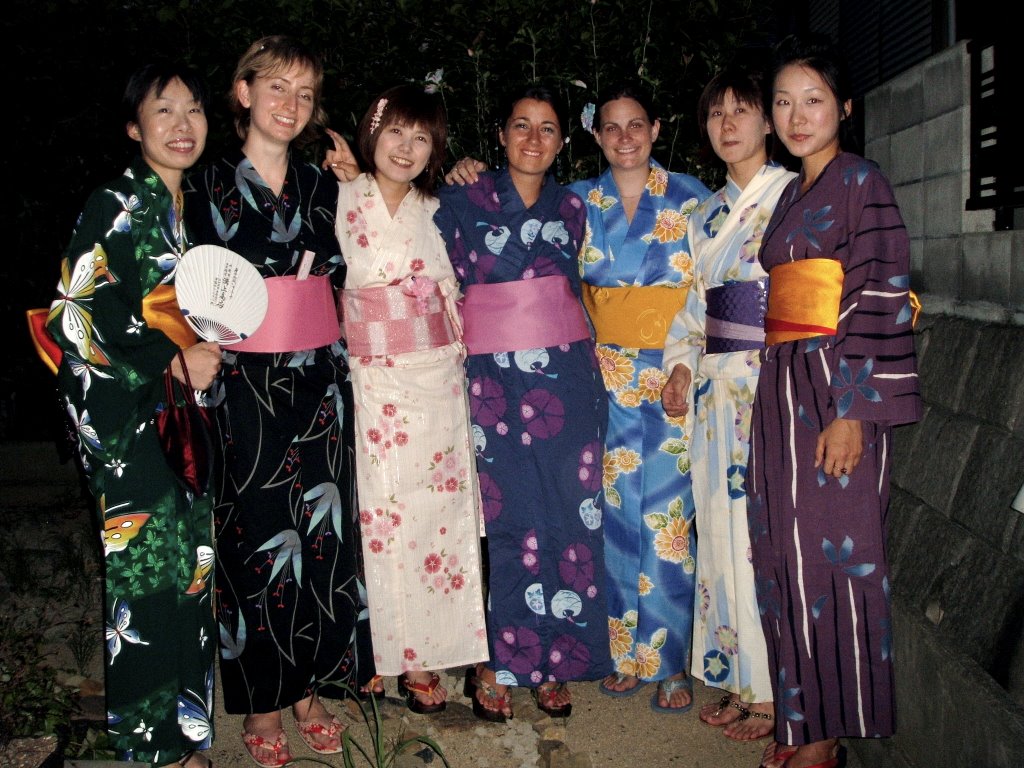
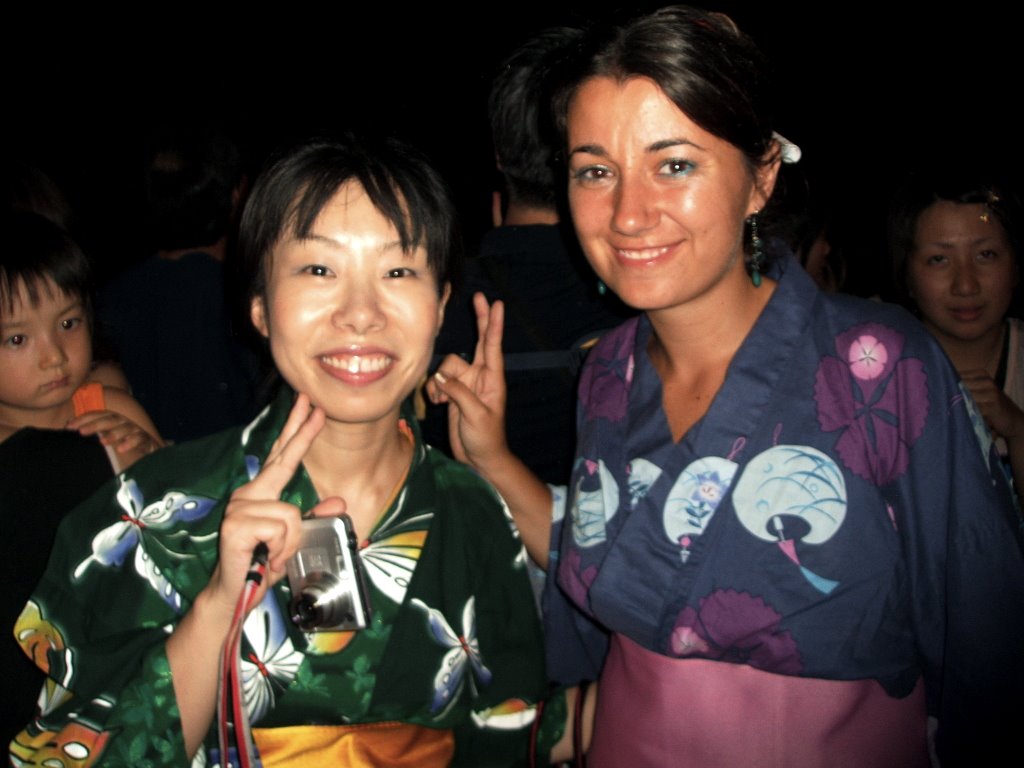
I suck in tight, breath deeply, and wish I could free up a hand to wipe the beading sweat off of my right brow. Three seconds pass. Ah, relief, the Obi is tightened. The bow is then formed, and hiked around to my middle back. I enter the zori shoes, take baby steps in the restrictive, but breathable summer kimono, and carefully make my way out the door, one short step in front of the other. Finally, I am now ready for a night out with my girlfriends.

Garbed in traditional Yukata, sunday night my girls and I ventured out to catch the ten thousand bravura display of Hanabi, or fireworks. Fireworks in Japan are incomparable to that of its American Fourth of July counterpart. The 45-minute booming affair doesn't leave the audience hoping for more, rather they ogle at the sky, pondering the pleasures of summer.

The summer fire candy isn't something new in Japan, and is preserved by younger generations as they stay in touch with their culture by decoring themselves in summer kimono and topping it off with an eclectic hairstyle.

In the Edo Period (1603-1867), fireworks became popular among people of high standing. As a pastime indulged in by the Shogun (the leader of samurai) and the daimyo (feudal lords), fireworks were set off as they sat in their private boats enjoying the summer breeze. Hanabi soon came into vogue among the ordinary people of Edo as well. The first fireworks were shown by the Tokyo riverside in 1733; the then-Shogun initiated the fireworks display as part of a memorial service for those who died in the record famine in the previous year. Ever since then, hanabi has become a regular summer feature.

What makes Japanese so passionate about Hanabi? One answer may be that fireworks evoke a feeling similar to that which Japanese have toward cherry blossoms. That is, in the splendid bursts of the fireworks Japanese see a metaphor for life: beautiful but ephemeral.

For me, it's a chance to make a big deal about an often overlooked, unnoticable feeling. The feeling of lasting friendships in new places. The feeling of warm summer nights. The feeling of pure contentment: wishing you could be no other place than right where you are. The hopes of an endless summer are ignited as showers of light span overhead.

Thursday, June 22, 2006

Animal House: The Benefits of Pet Loving


It's a lifestyle, being an animal lover. Did you know that people who have pets tend to live longer than people who don’t? According to the Centers for Disease Control, in 1920 the average life expectancy was 54. Today, people can expect to live to 78. Obvious speculations might include a better food supply, medical care, hygiene or any number of other factors. It's not totally clear to scientists how they all add up. But what we do know is that studies are finding modern technology doesn't tell us the whole story when it comes to why we are living healthier, longer lives.


In place of strong genetics, impeccable healthcare, and a healthy diet, studies have found the secret to living longer is simple. If you really want to live longer, then start with your attitude. Your way of thinking not only improves your outlook on life, but also how long you actually live. In 2002, researchers at the Mayo Clinic in Rochester, Minn., found that optimistic people decreased their risk of early death by 50 percent compared with those who leaned more toward pessimism. A part of the crutch of this optimism is pet ownership. When we're wrapped up in the cares of life, our pets can remind us of the importance of simplicity.


Animal lovers will be happy to know that having a pet can add years to your life, as well. One of the first studies in this arena, which appeared in Public Health Reports in 1980, showed that the survival rates of heart-attack victims who had a pet were 28% higher than those of patients who didn't have an animal companion. "The health effects seem to be very real and by no means mystical," says Alan Beck, director of the Center for the Human-Animal Bond at Purdue University. "Contact with companion animals triggers a relaxation response," he says.

Nursing homes in New York, Missouri, and Texas that included animals in their environment, noticed that medication costs dropped from $3.80 per patient per day to only $1.18. In addition, the Eden Alternative residential home for elderly which provides an environment with birds, dogs, cats, rabbits, and chickens reported a 15 percent lower mortality rate in a 5 year period.


Rebecca Johnson, a professor of gerontological nursing at the University of Missouri, Columbia, showed that interaction with pets does, in fact, reduce levels of the stress hormone cortisol. The ability of companion pets to reduce our overall stress level probably accounts for most of their life-extending qualities. A recent study at the State University of New York at Buffalo found that pets even help lower blood pressure. People with hypertension who adopted a cat or dog had lower blood pressure readings in stressful situations than did those who did not own a pet.

"For many people, pets also provide a reason to get moving," adds Johnson. How many people, after all, would actually get any exercise if it weren't for overenthusiastic dogs? I know when I'm at home in America, I can see my dog Duncan's eyes pleaing to me for a good run. It's like I can read his mind.
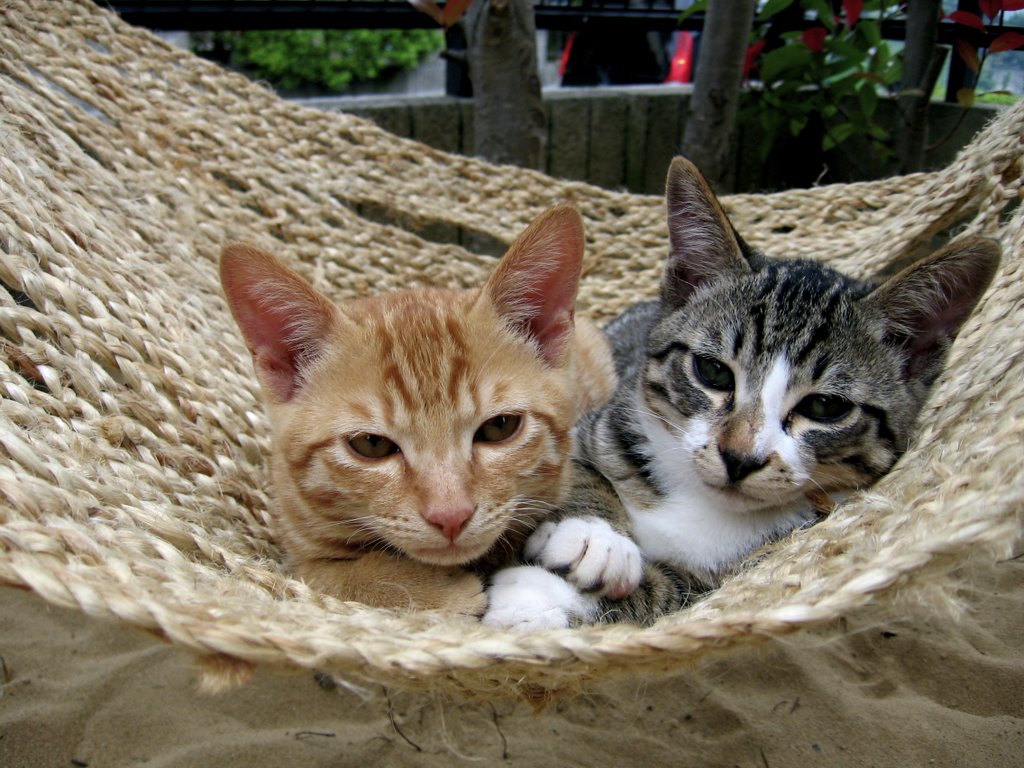
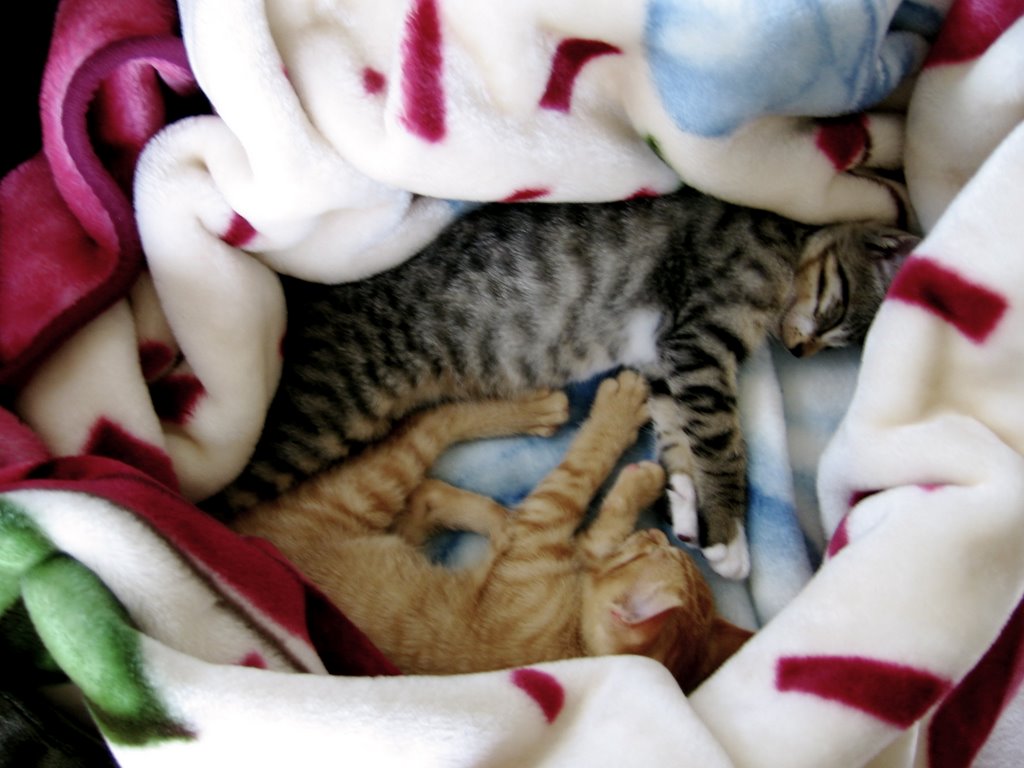
Animals experience life in much the same way that you and I do. They burp, sneeze, hiccup, dream, feel joy and happiness, fear and pain. When Duncan has nightmares and cries in his sleep, we let him sleep it off. When my new kittens, Yume (you may) and Rokube (Roku bay) situate themselves ever so perfectly in my lap, I know they are comfortable in their new surrounding. Our pets have a fascinating capacity for love and loyalty. At the same time, pets will wither in neglect and abuse.

So in 2006 as 63 percent of Americans are projected to spend $38.4 billion dollars on the 37.7 million cats and 43.5 million dogs that inhabit our homes and touch our lives, remember to give your pet an extra treat for enriching your life with health and longevity.


(Special thanks to Duncan the dog, Yume the orange cat, and Rokube the blackish cat .... Want to find out what kind of dog you are?? go to what kind of dog I am and click "activities")

Monday, June 19, 2006

Vroom, Vroom... Helmet and All..


A couple days ago I bought a new toy, a Honda 250CC medium-sized racing style bike. If I was in America, I don't know if you'd see me make the same purchase. Speed limits exceeding 70 mph, automobile drivers' carelessness and affordable gas may have kept me content on four wheels stateside. But, as petrol prices in Japan now average 4.93 USD a gallon, my Camry's fuel efficiency just wasn't giving me enough bang for my buck. I pondered over it for a bit, and decided I would join the thousands of Oba-sans (old women) already on the streets and opt for riding on two wheels.

A slower speed limit (average 35 mph) and car drivers attentitiveness to bikers sealed the deal. The warm climate, endless sunshine, cool silver helmet and bad-ass biker chick image had nothing to do with the decision. This recent purchase coincided two days after the Steeler's young quarterback, Ben Roethlisberger, was thrown helmetless from his large-sized racing style bike, crashing into a windshield and then subsequently face-planting into the pavement, blood pooling around him. If this doesn't deter consumer confidence, I don't know what will.

Roethlisberger, caught frequently without his familiar football headgear neccessity, may have spurned the helmet debate in Pennsylvania, but for those of us who don't need to be coaxed to protect our pretty faces when travelling at high speeds, what other precautions can we take to ensure rider safety?

"The key is to be aware of your physical and mental condition," the Web site AA reports. They also recommend

1. A helmet
2 A long sleeved shirt or jacket, which fits closely around the wrists.
3. Long pants to provide protection from the hottest parts of the bike
4. Full fingered gloves to protect against abrasion and help maintain control of the motor bike
5. A visor or goggles to ensure good visibility is maintained and to protect the eyes from dust, wind and debris
6. Robust footwear for maximum grip, preferably covering the ankles, with no laces as these can be dangerous if they become tangled in the pedals.

Check, check and check. So loved ones, breathe easy, With safety, awareness and precaution at the helm, riding can be relaxing and worry-free

Friday, April 14, 2006

Polynesian Fire Dancing


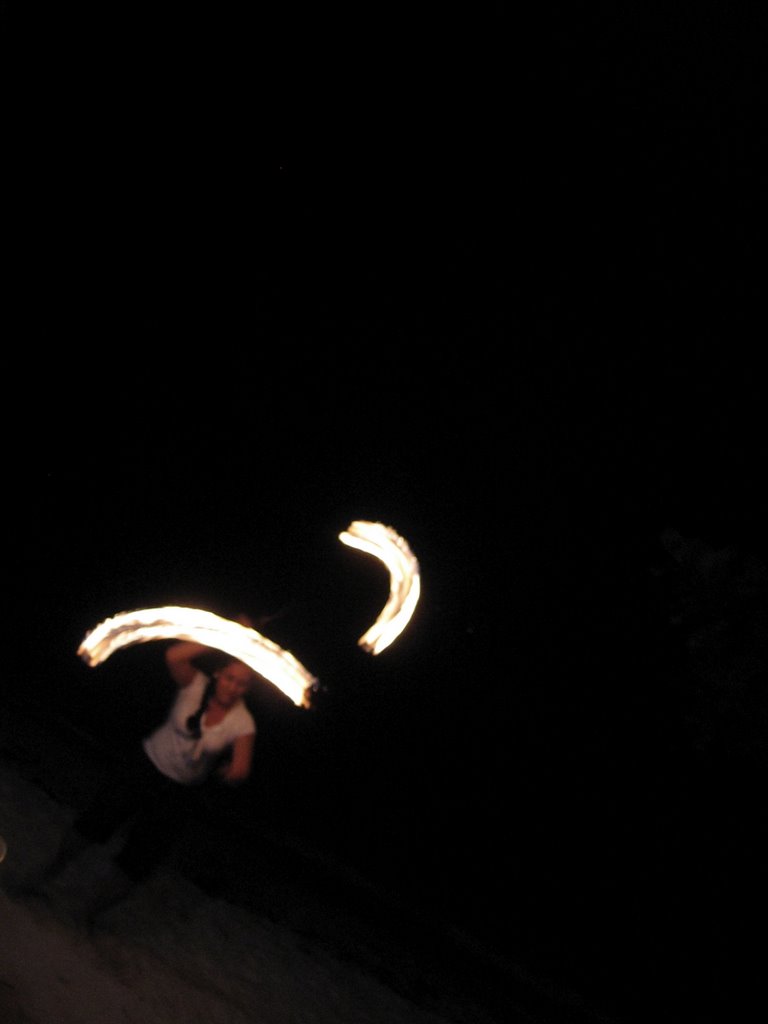
Day 5 of my five day blog-a-thon and I have been blogged down with so many posts that I am simply blogged out. Good thing it's Friday! I was first exposed to Polynesian dancing when I lived in Guam, after university. Although Guam is a territory of The States, because of location it also has a touch of Asia, and little bit of Hawaii and a chunk of Polynesia in it. Part of the ingredients to this Polynesian culture is fire dancing.

This heritage extends down the pacific polynesian rim touching as far down under as New Zealand. Amid this pacific triangle is where polynesian culture thrives. I was reminded of this wide Polynesian girth on my visit to the Philippines, where I witnessed some modern Polynesian fire dancing.


Dance is a vehicle for cultural expression. In the Pacific, like indigenous groups across the world, people have carried and passed on their knowledge through oral, visual and embodied traditions for millennia. The performance arts reflect spiritual, political, social, economic and aesthetic values and practices. We can learn much about a people and their history by paying attention to dance and body movement.

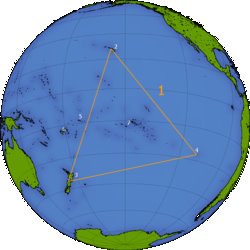
Geographically, Polynesia may be described as a triangle with its three corners at Hawaii, New Zealand, and Easter Island. The other main island groups located within the Polynesian triangle are Samoa, Tonga, and the various island chains that form the Cook Islands and French Polynesia.

Let's have a look at some types of dances within this triangle.

In New Zealand the native polynesian dance is haka and forms a crucial cornerstone of Maori culture. Haka literally translates as "fiery breath" and a fierce attitude accompanies the performance of traditional haka. Maori culture is deeply rooted in a tribal system in which the protection of land and other resources is paramount.

In Tahiti Polynesian dance was outlawed in the 1820s but made a timid come back in the early 20th century. The costumes only allowed the audience to see the face, the feet and the hands ; the gestures and attitudes were fixed. A renewal only appeared in the second half of the 20th century, but incurred cultural losses from the prior limitations.

While Samoa was politically divided into eastern and western colonial territories in 1899, the Fa'a Samoa (way of life or identity) remained binded. America Samoa is an unincorporated territory of America. American Samoans have been reluctant to disconnect from the United States despite their militarized history. The US military is today a significant source of employment and pathway of migration for American Samoans. Transformations in the arts are taking place across Samoa. This is evident in their dance. Hip hop culture in particular is popular among Samoan youth. They also do the Samoan Slap Dance, or fa'ataupati, which some say traditionally began as as a way to ward off mosquitos.

New Caledonia is an overseas territory of France which officially annexed the group in 1853. The indigenous peoples of New Caledonia describe themselves as Kanaks, a term which actually originates from the Hawaiian word kanaka and used in a pejorative manner by Europeans during the colonial period. Pilou-pilou describes the whole range of ceremonial practices. The pilou involves large numbers of people moving in a clockwise or anticlockwise fashion around a central pole to the beat of percussive rhythms.

The seemingly universal theme in each Polynesian dance is that it rooted and changed by the countries histories.

Thursday, April 13, 2006

Religion in Japan...Entry 4 in a series of 5


I have been living in Japan for just short of three years now, and many things still remain a mystery to me. For one, how buddhist are Japanese buddhists? And Shinto, the religion native to Japan, is that separate all together? Can you be two religions at once?


Buddhism originated in India in the 6th century BC. It consists of the teachings of the Buddha, Gautama Siddhartha. Of the main branches, Mahayana or "Greater Vehicle" Buddhism found its way to Japan. Buddhism was imported to Japan via China and Korea. While Buddhism was welcomed by the ruling nobles as Japan's new state religion, it did not initially spread among the common people. There were also a few initial conflicts with Shinto, Japan's native religion, but the two religions were soon able to co-exist harmonically and even complemented each other. Nowadays, most Japanese practice both Shinto and Buddhism.

"Buddhism in Japan is not strict," my 67-year old student, Shoji Ogomori said, "It's generous. I pray every morning and every night in front of a buddhist altar: I pray for other men, illnesses and traffic accidents. But in the case of Shinto I pray only for myself. Only because that's the custom. I believe in everything -- there are 8 million gods in Japan. Japanese believe that even the small stones on the streets could be gods."


Shoji's view of religion is reflective of many Japaneses' view: open-minded, not concerned with the right or wrong answer, and instead of resting one's belief on one subject, they opt to pray to many. Nowadays about 90 million people, or 85 percent, consider themselves buddhists in Japan. The everyday Japanese buddhist may have a wedding at a Christian church and go to a funeral at a Buddhist temple. They might pray at a Shinto shrine to receive a chocolate for St. Valentine's Day, a Christian-rooted holiday. On New Year's, the most celebrated holiday in Japan, the Shinto shrines may be the only busy places you'll find. Some of the more famous shrines will be jammed with people, as they go up to the altar and pray to gods for the health and prosperity of the coming year. Though, just moments after, those same people could be found at a Buddhist temple, going to hear the 108 bongs of the bell, which are supposed to drive off the 108 sins of the human condition.

For some westerners it may be outlandish to think that one could believe in many gods, let alone many religions. With such a hodge-podge of different religious practices, are the beliefs behind all the celebrating uniform?

"When I die, I believe I will go to heaven," another student, Seiji Kondo said. "But not the Christian heaven, the Gokuraku heaven."

Eternal life in a heaven after death in Japanese called Gokuraku-jyodo. People who believe in this don't believe in a transcendent type of god or gods, but they do believe in the need for a personal savior, the power of prayer, and this paradise nirvana where they will be reborn.

With many Japanese, religion does not play a big role in their everyday life. The average person typically follows the religious rituals at ceremonies like birth, weddings and funerals, may visit a shrine or temple on New Year and participates at local festivals (matsuri), most of which have a religious background.

The Japanese way to incorporate the features of many religions into their daily lives shows the religious tolerance of Japanese buddhists and the importance Japanese place on human kindness. I see this every day. In every polite gesture, every time one of my students goes out of their way to help me without thinking twice about it, and everywhere around me.

Wednesday, April 12, 2006

Q and A with a Drag Queen...3 in a series of a 5 day Blog-a-thon


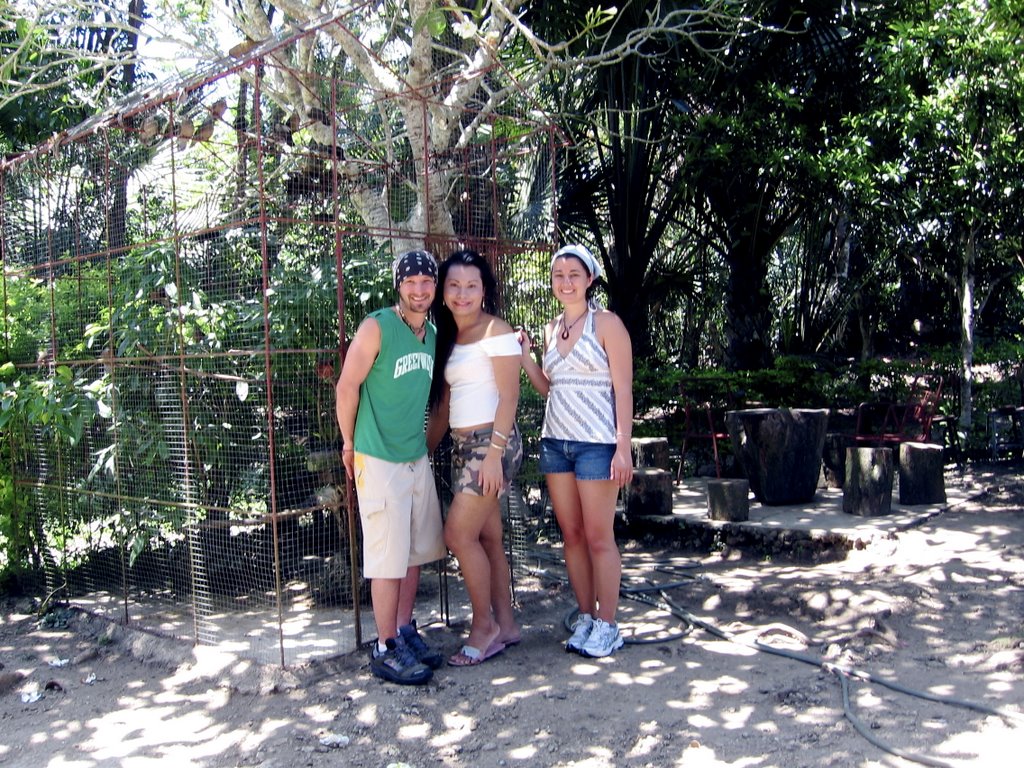
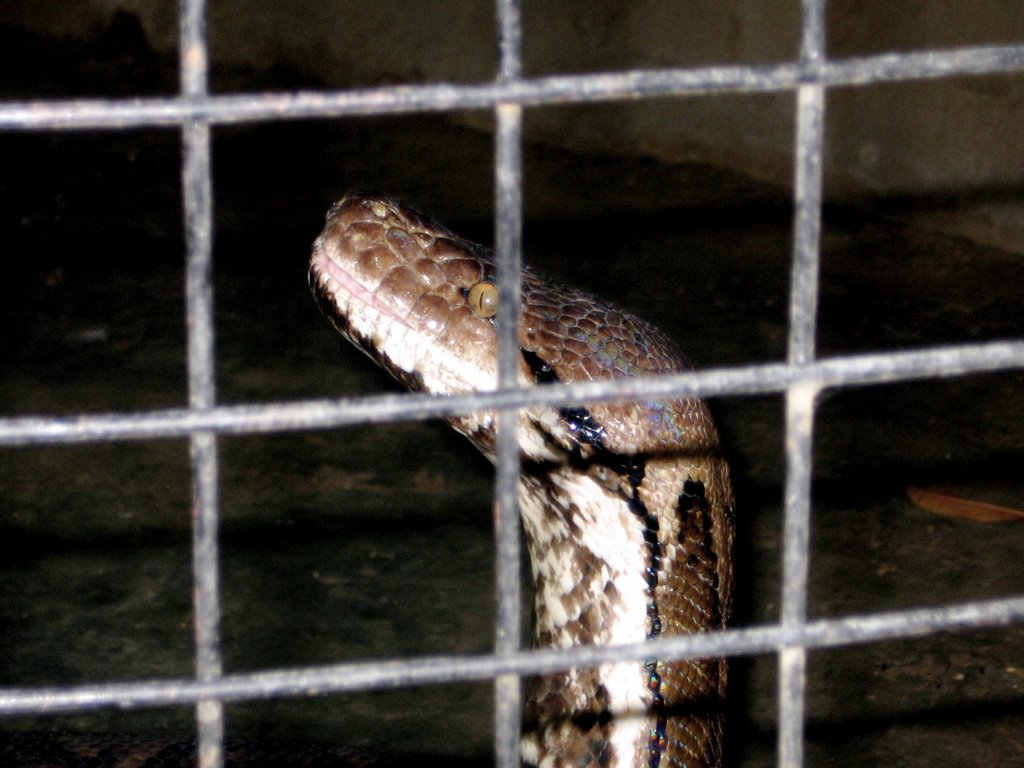
After a bumpy motorbike ride on the back trails in Bohol, we walked up to the off-beaten and hard to find mini zoo, paid our 10 cent a head entrance fee, and were warmly greeted by a man in a short camoflaged skirt and tight-fitted shirt, whose cross-dressing was equally exotic as the subject that we set out to see. Meet Juanita, priding herself on her ability to give tender loving care to her beloved PRONY, among the largest pythons in captivity.


Juanita: Welcome, welcome, please come in and meet Prony. Where do you guys come from?

Danielle: America. Oh my, it's HUGE. How big is it? And where did IT come from?

J: It came from the forest around here. It was captured on October 21, 1996 at length of 5 feet, weighing 5 kilograms (11 lbs). Now it is 23 feet and 200kgs, or 441 pounds!!

D: Is that monstrosity of a size normal?!

J: No! Her current size is comparable to pythons in the wild who are already 40 to 50 years old. Prony is only 9! We think it's because of all of the TLC she gets.

D: What's a normal day in the life of Prony?

J: Well, she likes to spend most of her days coiled up in the corner. When she becomes restless, we know it is getting close to feeding time.

D: How often is that?

J: Once a month. We just fed it a few days ago. Look, you can still see the pig in it's stomach.

D: Is that what that lump is?

J: Yeah. When it was a baby we fed it chickens. Now it has graduated into pigs and goats. We put a pig in the cage and then Prony whips her body coils around her prey, strangling and suffocating it, while breaking all its bones, then swallows it whole. But you know, she's a picky eater, she just won't eat any old thing.

D: Really, how so?

J: Well, she won't eat the pig if it's sick, spotted or dark. And if it's not alive she won't touch it. She only likes clean white pigs weighing at least 40 to 50 kilograms.

D: It looks like a big bump. If I walk in the cage, will it want to eat me too?

J: No, she thinks she is a human! Since we had her since she was a baby she is so kind and even sensitive. She loves people. I'm the one who personally goes in and removes her shedded skin.

D: How often do snakes shed their skin?

J: All snakes shed their skin in once piece. Young snakes grow quickly and shed frequently, roughly every 6–8 weeks. Large, adult snakes grow more slowly, and shed less frequently, about once in 1–2 years. The rate of shedding varies with the availability of prey. All snakes shed their skins following an injury, probably to hasten healing.

D: So what is in store for Prony's future??

J: We hope that with proper care she could live to be up to 120 years old. Prony is like our baby! She is part of the family, I guess we will continue to keep taking good care of her and celebrating her birthday every year. By the way, do you guys know Kelly Clarkson?

Tuesday, April 11, 2006

Lomography


It's approaching Tuesday in the states. Day 2 of my Blog-a-thon. I've decided to take a break from the Philippines postings and see if there are any "Lomos" out there. Or should I say "Lomographers."
Not sure what the correct term is, I'm a newbie to the Lomo scene.
In the early 1990s a couple of students discovered a small, enigmatic Russian camera, the Lomo Kompakt Automat, and created a new style of artistic experimental photography with their first unorthodox snapshot distortions. The approach: taking as many photographs (Lomographs) as possible in the most impossible of situations possible and from the most unusual positions possible, and then having them developed as cheaply as possible. The result is a flood of authentic, colourful, crazy, off-the-wall, unfamiliar and often brilliant snapshots.
And that's lomography for you.
The lomography craze has spread world-wide. It's a commercial trademark of Lomographische AG, Austria for products and services related to photography. The name is licensed from a former state-run optics company LOMO PLC in St. Petersburg, Russia. Now the company creates cameras equipped with fish eye lens inexpensively priced for the avid lomographer.

The following are the company's 10 Rules of Lomography:
1. Take your LOMO everywhere you go.
2. Use it anytime - day or night.
3. Lomography is not an interference in your life, but a part of it.
4. Shoot from the hip.
5. Approach the objects of your lomographic desire as close as possible.
6. Don't think.
7. Be fast.
8. You don't have to know beforehand what you've captured on film.
9. You don't have to know afterwards, either.
10. Don't worry about the rules.

Similar to the concept of the "Kodak moment," the Lomography motto of "don't think, just shoot" presumes spontaneity. Enthusiasts have even established a lomography society, for fans to come out of the closet with their talent. Check out www.lomography.com and see if you have what it takes to be a lomo.

Friday, March 10, 2006


My ears were burning. I came inches close to one of the many idiosyncratic characteristics of Japan; there is a festival for everything. When I heard of a fire festival on the world's largest Caldera and one of the Earth's most historically disruptive volcanoes, facts that are esoterically known to only maybe the residents of the surrounding cone, I had one thought: road trip. So I jumped in the car, headed three hours southwest of my scenic hometown settled among the westernmost part of Japan's mainland, and made way for a weekend trip that would be reckoned to be a pyromaniac's wet dream.

The Japanese islands are laced with volcanoes, some brazenly active and others not. Mt. Aso sits in the center of Japan's southern island of Kyushu and possesses merely this: the largest active crater in the world. The crater measures 71 miles (114 km) in circumference, 17 miles (27 km) from north to south, and 10 miles (16 km) from east to west, and is not bounded by the peak of bellowing smoke. Rather, the originial crater is marked by a Caldera, or a bowl-shaped volcanic depression. With in this crater lies roughly 100,000 inhabitants, a population that sits upon rich soil that gives way to countless wildflowers in the spring and summer. Such is the charm of Aso.
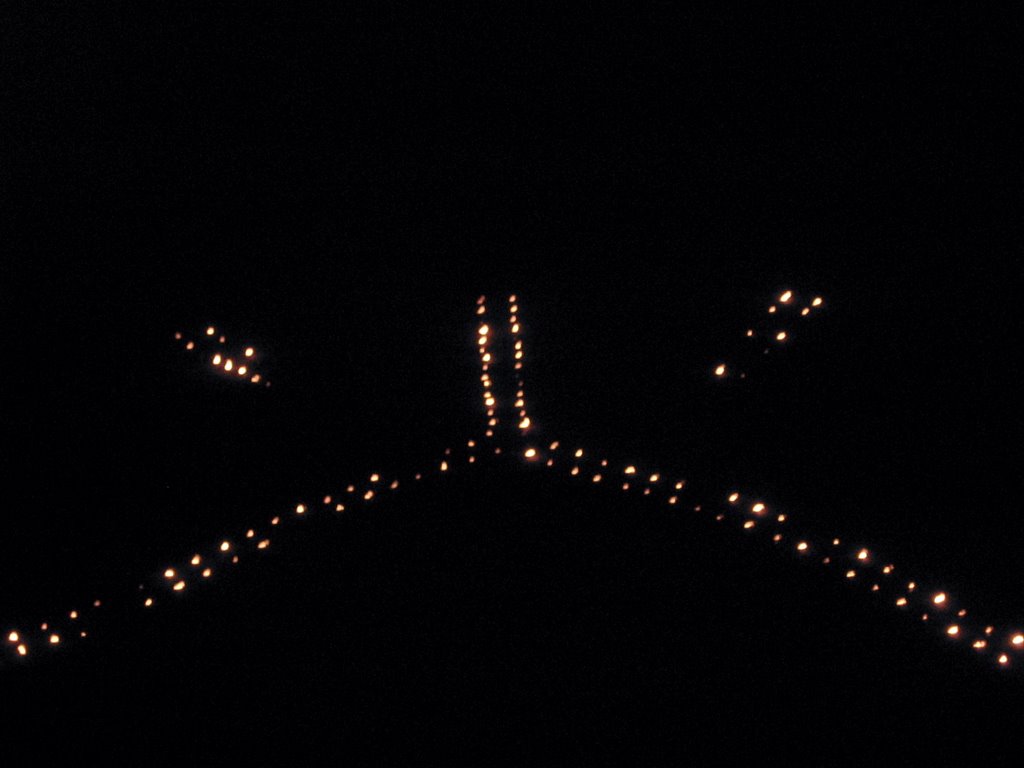
To prepare for this summer blossom, as spring nears local farmers carefully burn huge swaths of vegetation on the mountainside to cultivate the soil, ridding it of harmful insects. Kick-starting the mountain blaze is a fire festival that is held throughout March, beginning with the lighting of the Chinese character "Hi," (hee), meaning fire, on the mountainside. As I approached this spectacle by car from a distance, just after the sun set on my first night there, I could only imagine the preparation and precision it took to create such a thing, only to be admired from a distance.

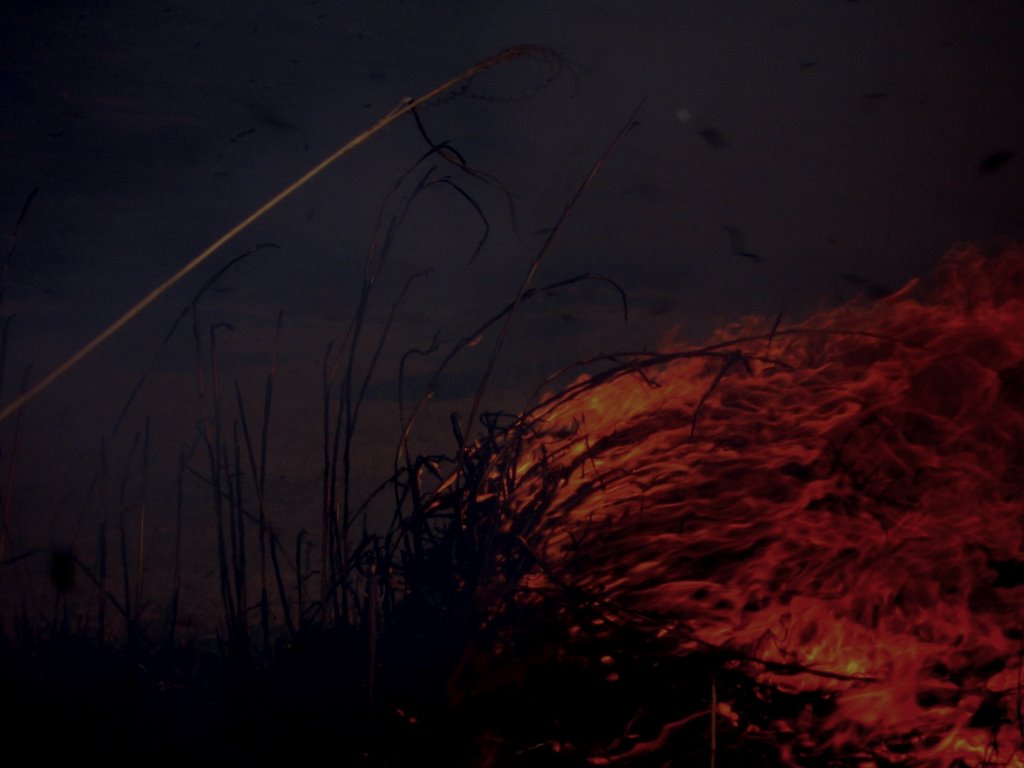
If that was all to the road trip, I would have turned back that moment satisfied with the 6-hour aggregate drive, as the majority of the group did. But Gino and I stayed on, camped out in a temperature nearing freezing, only to be rewarded the next day by sights for burning eyes. As we drove to the top of the peak, bits of ash blinded the dashboard of our beat-up 91 Camry. There we were, standing inches away from a raging fire that was racing down the sides of the slope, contained only by nature and the roadways leading up to the volcano's summit.

We came down from our firey-high that day filled with stories about the unexpected satisfaction that this road trip was bringing us, settling into a nearby hotspring town. Bathing naked, as is the custom in Japan, we unwinded (separately of course, as is also the custom) soaking in the mountain water, said to have specific healing powers.

Of all the volcanoes in Japan, the majestic -- and dormant -- Mt. Fuji draws by far the most attention, rightfully so. The views of Fuji from a distance and from the moutain top are incomparable. Yet, who knew that only a short drive away lied another volcano that has been overlooked by the eyes of many tourists? Forget Fuji, as far as a short day trip goes with easy accessibility to the top and hyperactivity both in the crater and on the mountainside, the 5,000 feet (1500 meter) Mt. Aso blows the 12,400 foot (3775 meter) Fuji out of the water, or should i say sky.